

Practicing English conversation topics became much easier after turning everyday moments into simple speaking opportunities. Casual chats about hobbies, movies, travel, and life goals often help ESL learners feel more confident than memorizing grammar rules for hours. Real conversations create natural fluency, better pronunciation, and stronger communication skills over time.
Key Takeaways
- Everyday speaking topics improve fluency naturally
- Real-life conversations build confidence faster
- Beginner learners should start with familiar subjects
- Small talk improves social and professional communication
- Scenario-based speaking practice feels more natural
How To Have a Nice Conversation in English?
Strong speaking skills develop through regular conversation practice, not only through textbooks and grammar exercises. Many English learners understand vocabulary well but still struggle to express thoughts naturally during conversations.
Using meaningful english conversation topics helps learners think directly in English instead of translating every sentence mentally. That habit improves sentence flow, pronunciation, and listening comprehension much faster.
Practical discussions also make learning enjoyable. Talking about favorite foods, travel memories, or future dreams feels more engaging than repeating isolated grammar drills repeatedly.
Everyday Speaking Builds Confidence
Daily speaking practice creates comfort with common expressions and natural conversation patterns. Learners become less afraid of making mistakes because discussions feel more relaxed and realistic.
Simple topics also encourage longer answers and better interaction. Questions about routines, hobbies, or entertainment help conversations continue naturally without sounding forced.
Real Conversations Improve Fluency
Fluency develops when learners actively use vocabulary in context. Real conversations improve reaction time, sentence structure, and communication confidence simultaneously.
This approach also improves memory retention because learners connect words and phrases with personal experiences and emotions.
Top English Conversation Topics For Daily Life
Daily topics are perfect for beginners because they feel familiar and easy to discuss. These conversations improve comfort with common English vocabulary and speaking patterns.
Daily Routines And Hobbies

Conversations about weekends, routines, sports, pets, and relaxing activities are excellent for beginner ESL learners. These topics require simple vocabulary while still encouraging meaningful interaction.
Questions like “What do you usually do after work?” or “What hobby helps you relax?” make conversations feel natural and friendly. Learners can describe habits, interests, and personal experiences comfortably.
Food And Favorite Activities
Food conversations are enjoyable because everyone has opinions and experiences to share. Learners can discuss favorite dishes, cooking habits, restaurants, and international cuisine easily.
Favorite activities like gaming, photography, fitness, or reading also help learners practice descriptive vocabulary and storytelling naturally.
Entertainment And Pop Culture
Movies, television shows, books, and music are among the most effective english conversation topics for modern learners. Entertainment discussions feel exciting and encourage emotional expression.
Talking about favorite actors, memorable scenes, or music preferences improves vocabulary related to opinions and personal taste. These conversations also introduce modern slang and natural expressions used by native speakers.
English Conversation Topics About Travel And Culture
Travel and culture discussions help learners communicate in realistic social situations. These conversations improve practical vocabulary and build confidence for international communication.
Travel Experiences And Dream Destinations

Talking about past vacations and dream travel destinations creates energetic and personal conversations. Learners can practice storytelling while describing memorable experiences and future travel goals.
Questions like “What country would you love to visit?” or “What was your best travel experience?” encourage longer and more detailed answers. Travel discussions also introduce vocabulary related to transportation, hotels, food, and cultural experiences naturally.
Cultural Differences And Traditions
Cultural conversations help learners understand communication styles, Gen Z slang words and social customs from different countries. These discussions improve global awareness while expanding conversational English skills.
Learners can compare holidays, traditional foods, family customs, and social behavior comfortably during these conversations. Cultural topics also create opportunities for respectful and meaningful interaction during language exchanges.
English Conversation Topics For Deeper Discussions
Once learners feel comfortable with simple topics, deeper conversations help improve critical thinking and advanced communication skills.
Personal Goals And Life Experiences
Conversations about dreams, fears, personal growth, and unforgettable memories encourage emotional storytelling and stronger sentence formation.
Questions like “What is one goal you want to achieve this year?” help learners explain ideas clearly while practicing future tense and descriptive language. These discussions often feel more authentic because they involve personal thoughts and real experiences.
Technology And Social Media
Technology and social media are popular english conversation topics because they connect with everyday modern life. Learners can discuss favorite apps, smartphone habits, online learning, and the impact of technology on communication.
These conversations introduce useful vocabulary related to digital life and current trends. They also help learners practice giving opinions and explaining preferences naturally.
“Would You Rather” And What-If Questions
Creative hypothetical questions improve spontaneous thinking and conversational confidence. Topics like “Would you rather live in a city or a rural area?” encourage deeper explanations and playful interaction.
Questions such as “If you could have any job in the world, what would it be?” help learners practice imagination and descriptive speaking.
Common Small Talk Openers
Small talk is one of the most important communication skills for ESL learners because it helps start conversations naturally in social and professional situations.
Easy Questions To Start Conversations
Simple openers like “How’s your day going so far?” or “Did you have a good weekend?” make interactions feel comfortable and friendly.
Questions about hobbies, free time, or recent experiences also encourage smooth and natural conversations without too much pressure.
These small talk patterns are commonly used in workplaces, schools, cafés, and networking events.
Keeping Conversations Going Naturally
Strong conversations continue through follow-up questions and genuine interest. Asking “What happened next?” or “Why do you enjoy that?” keeps discussions engaging and interactive.
Listening carefully and reacting naturally also improves conversational flow. Learners become more confident when they focus on communication instead of perfect grammar.
How To Practice English Conversation Topics
Improving speaking skills requires consistency and realistic communication habits. Practicing english conversation topics daily creates noticeable improvement in fluency and confidence over time.
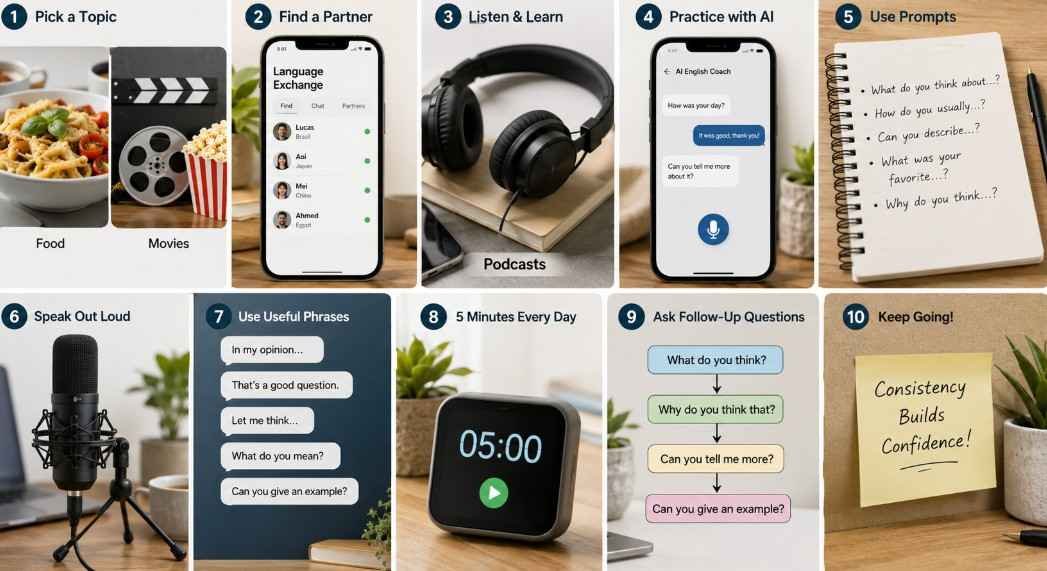
- Start with familiar subjects like food, movies, or hobbies because they feel less stressful and easier to discuss. Comfortable topics help learners focus on pronunciation and communication instead of worrying about difficult vocabulary.
- Speaking out loud every day is also important. Reading silently cannot improve conversation skills effectively because speaking requires active pronunciation and sentence formation practice.
- Using language exchange apps, speaking clubs, podcasts, and AI conversation tools can create additional speaking opportunities. Even short five-minute conversations daily can improve fluency significantly over time.
- Learners should also practice asking follow-up questions naturally. Conversations become more realistic when both people actively respond and continue the discussion together.
Common Mistakes During English Conversations
Many ESL learners try to sound too advanced too quickly. Complicated vocabulary and overly formal expressions often make conversations feel unnatural and stressful.
Simple English usually sounds more fluent and confident during everyday interactions. Native speakers commonly use short and direct sentences during casual conversations.
Another common mistake is fearing grammar errors too much. Communication matters more than perfection during speaking practice. Confidence grows faster when mistakes become part of the learning process.
Avoid memorizing entire scripted conversations because real discussions change constantly. Flexible communication skills work much better in natural situations.
Frequently Asked Questions
1. What Are The Best English Conversation Topics For Beginners?
Daily routines, food, movies, hobbies, travel, and music are excellent beginner-friendly english conversation topics because they feel familiar and easy to discuss.
2. How Can I Practice English Conversation Topics Daily?
Practice through language exchange apps, speaking clubs, podcasts, AI tools, and short daily conversations with friends or study partners.
3. Why Are English Conversation Topics Important For ESL Learners?
English conversation topics improve fluency, confidence, listening comprehension, pronunciation, and natural communication skills through real interaction.
4. What Are Good Deep English Conversation Topics?
Personal goals, technology, life experiences, dreams, fears, and hypothetical “what-if” questions work well for deeper discussions.
Let’s Keep The Conversation Going
Practicing English conversation topics regularly can transform speaking confidence and make communication feel much more natural. Everyday discussions, small talk, travel stories, and deeper conversations all help ESL learners improve fluency step by step. Consistent speaking practice and meaningful interaction are the keys to sounding comfortable and confident in English.